Greville revelled in goalkeeping role
March 31, 2003
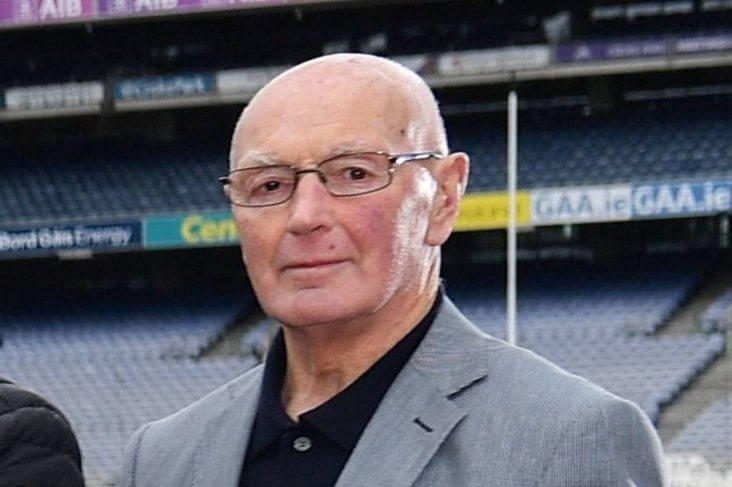
Sean Greville defied all the odds to make it as a top class hurling goalkeeper. Here, 'Maroon and White' profiles the Raharney great whose talents saw him selected on the Westmeath Topic Team of the Millennium a couple of years ago.
A truly remarkable man is Westmeath hurling great Sean Greville. Born with a deformed right foot, he defied all the odds to make it as a top class goalkeeper.
An integral member of the talented Westmeath team of 1980s which was desperately unlucky not to make a major breakthrough, Greville gave his all for the county for the best part of 20 years. He was a hugely popular figure with team-mates and supporters alike and it didn't come as a surprise to anyone when he was named on the Westmeath Topic Hurling Team of the Millennium a couple of years ago.
"It was a great honour, especially when you think of all the great goalkeepers that have played for Westmeath down the years," he says.
"I was lucky enough to be a part of a reasonably successful Westmeath team during the 1980s and that was probably a factor in my selection. A lot of people would have seen me play, whereas they mightn't have been old enough to remember some of the fellas that played before me."
Though he played a lot of his club career at full forward, Greville reveals that the only position he could possibly have played in at inter-county level was between the posts.
"From the time I first picked up a hurl, I was a goalkeeper," he explains.
"I had no real choice in the matter because of the problem I had with my foot. When I was six, I had an operation to have it turned around completely and spent nine months recovering in Coole Hospital afterwards.
"While the operation proved to be a success, it left me with a permanent limp and that's why I ended up in goal. Growing up, I would have received a lot of slagging from young lads, but I never let it bother me."
Greville cites Raharney stalwart Nicky Weir and Fr Tom Scully as the major influences on his career. An Offaly man, Fr Scully was the main hurling man in Belcamp College, Dublin where Greville boarded for three years.
Sean was only 14 when he made his debut for the Raharney seniors. "Nicky Weir picked me up on the way to a match one day and that's how it all started," he recalls. He went on to garner two All-Ireland minor 'B' medals with Westmeath before graduating to the under 21 and senior teams.
Greville made his senior debut for Westmeath in 1973, but it wasn't until around 1980 that he established himself as first choice goalkeeper following Ollie Gallagher's retirement.
A non-playing member of the Westmeath All-Ireland 'B' winning squad of 1975, Sean added two more All-Ireland 'B' medals to his collection in 1984 and '91. But the highlight of his career came in 1986 when Westmeath beat Antrim to secure promotion to Division 1 of the National League. The Lake County subsequently met Kilkenny in the National League quarter-final and would almost certainly have recorded a shock win had Mick Cosgrave's late goal not being disallowed.
The following year, Westmeath defeated both Offaly and Galway, but were still relegated following a play-off defeat to Wexford. Westmeath also took the scalp of Tipperary in National League games in 1983 and '85.
However, just when it seemed the team was on the verge of a major breakthrough, disaster struck in the guise of emigration. Many of Westmeath's best players headed for New York where they became ensconced in the local Westmeath club instead.
"I travelled out to New York to play with Westmeath on a few occasions and the team out there was stronger than the one we had at home," Greville explains.
"It was an awful pity that emigration should have hit that team so hard because there's no doubt that it had huge potential.
"I often wondered afterwards would we have made the breakthrough even if the lads had stayed at home because the support from county board level wasn't what it should have been. Not only did the clubs get first preference, but when we got promotion to Division 1, there was nobody to train the team. In the end, myself and David Kilcoyne had to take the training.
"In fairness to the county board, they brought in the likes of Johnny Clifford, Joachim Kelly and Georgie Leahy after that, but it was too late by then because the players were no longer around," he adds.
The three-time Westmeath Hurler of the Year soldiered on with the county until 1993. His final game was an All-Ireland 'B' final defeat to Meath at Tullamore. His most treasured possession from his inter-county days is a Railway Cup medal won with Leinster in 1988. He was also chosen as a replacement All-Star in 1986 (the same year as David Kilcoyne was honoured with an All-Star) and travelled to Chicago and San Franciso to play in exhibition games.
At club level, Sean won four senior hurling championship medals with Raharney and was trainer in 1984 when they upset a fancied Castletown-Geoghegan team. That same year, Greville made the switch from goal to full forward where he remained until his retirement in the late 1990s.
While four senior championship medals is an impressive haul by any standards, one of Greville's biggest regrets is that he didn't add to that number.
"I hurled with Raharney for roughly 30 years and for most of that time, we had an excellent team. We were always there or thereabouts and really, we should have won another five or six championships. We lost three finals in-a-row which was bitterly disappointing," he says.
Sean's sons Johnny and Paul are key members of the current Raharney team and both have represented Westmeath at underage level. In fact, Paul is a member of both the Westmeath minor hurling and football squads this year.
Sean still retains a massive interest in hurling, despite spending more of his spare time on the golf course these days. While he has no involvement in hurling at present, he refuses to rule out the possibility of getting involved again. "It's in the blood," he jokes.
As much as it pains him to say it, Greville feels that hurling in Westmeath is at its lowest ebb ever and, as things stand, he can see no real light at the end of the tunnel.
"When I was growing up, hurling was all you knew. But because there are so many different distractions for youngsters nowadays, hurling means very little to do them. A hurling medal would mean very little to a young lad now, whereas years ago it meant everything.
"When you see hurling strongholds like Raharney and Brownstown struggling as is the case now, it's a bad sign. Playing standards have dropped and it's difficult to envisage Westmeath making any sort of an impact in the next few years. It's all very sad."
Perhaps things would have turned out differently had the promising Westmeath team which Greville was a part of not been robbed of its best players all those years ago.
Most Read Stories